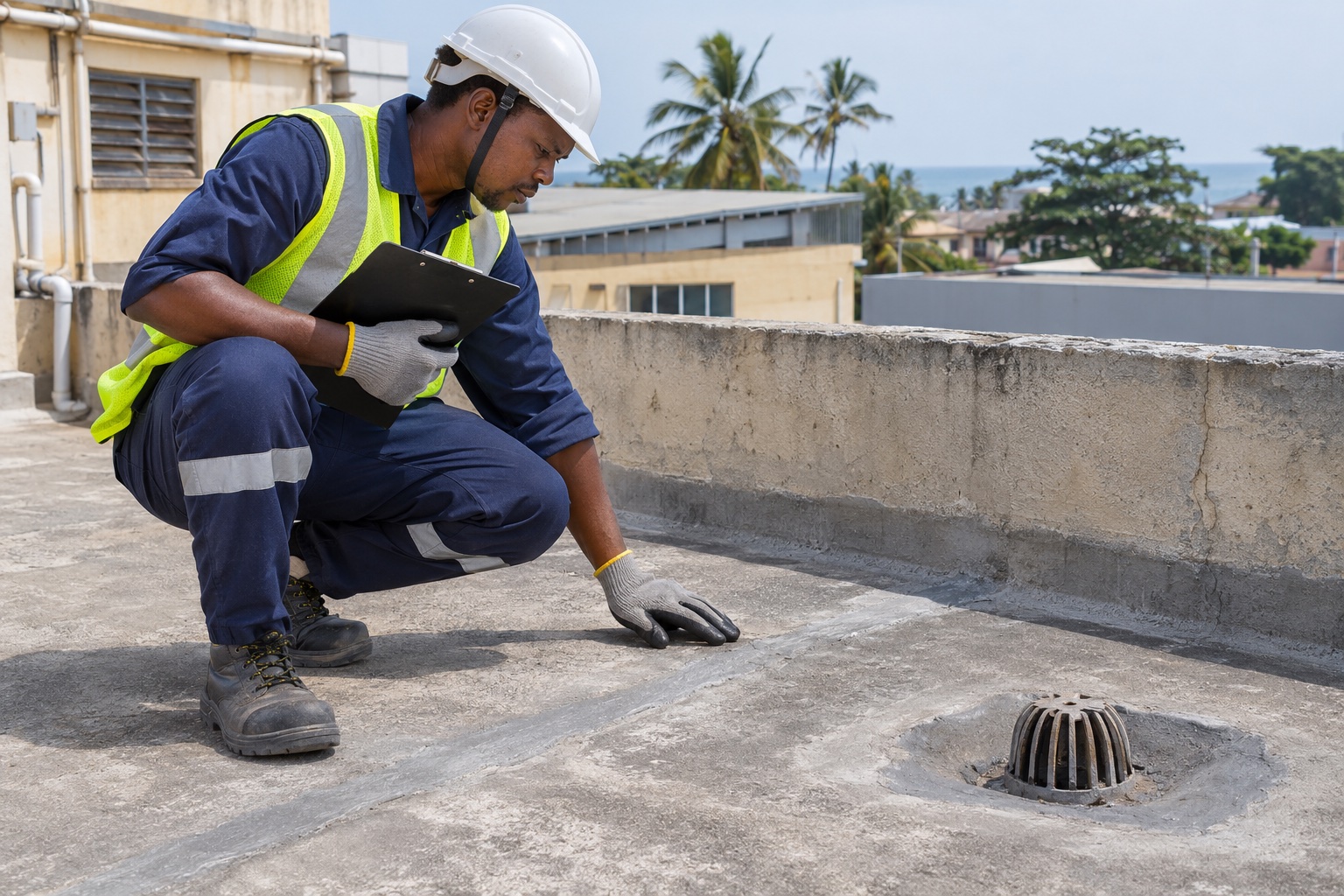
Quick answer. Choose a roof coating by the existing roof, drainage, exposure and complete coating system. “Water-based” and “oil-based” mainly describe how a product is carried or applied; they do not tell you whether it will adhere to a specific membrane, tolerate standing water or perform for a stated service life. Ask for the exact resin, compatible substrate and application data before comparing prices.
What do water-based and oil-based mean?
Water-based roof coatings commonly use water as the liquid carrier. Acrylic elastomeric coatings are one familiar example, but the label alone does not define every acrylic product. “Oil-based” is much less precise in roofing conversations. A buyer may mean a solvent-based asphalt coating, a solvent-based elastomeric material or simply anything that does not clean up with water. Those are different systems with different preparation and safety requirements.
For that reason, begin the conversation with the named chemistry on the technical data sheet. A water-based asphalt emulsion and a solvent-based asphalt coating can both be described as asphaltic; their installation conditions differ. An acrylic coating may be one layer of a specified basecoat-and-topcoat system. The carrier matters for application, but it cannot replace a roof-system specification.
Water-based vs oil-based roof coatings: a practical comparison
| Decision point | Water-based coating | “Oil-based” or solvent-based coating |
|---|---|---|
| What the name tells you | Water is the principal liquid carrier | A solvent or asphaltic formulation may be involved; confirm the exact chemistry |
| Substrate fit | Depends on the specific product, primer and existing roof | Also depends on the specific product, primer and existing roof |
| Application conditions | Drying can be sensitive to rain, humidity and temperature | Solvent handling, ventilation and ignition controls may be required |
| Existing coating | Check adhesion and compatibility before recoating | Check adhesion and compatibility before recoating |
| Ponding water | Never assume tolerance from the carrier | Never assume tolerance from the carrier |
| Purchase decision | Compare the approved system, required film build, coverage and written limitations | |
This table is a screening tool, not a product rating. GAF, for example, describes its Diathon water-based acrylic as a topcoat for a defined spray-foam system and asks for positive drainage and adhesion testing on previously coated roofs. Those details are more useful than a generic “water-based is better” claim. Similar care is needed when evaluating solvent-based systems.
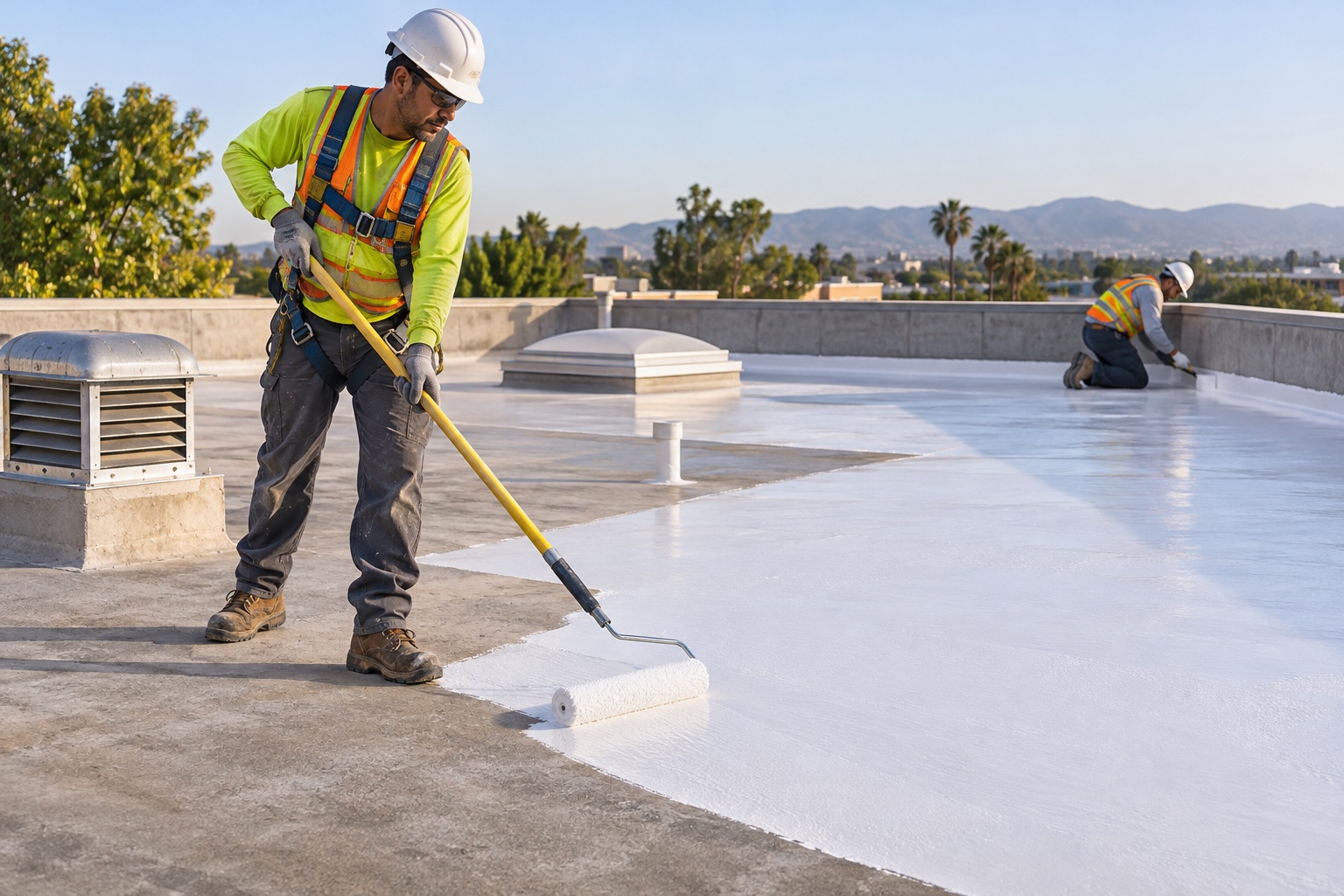
Start with the roof you already have
Before asking which coating to buy, record the roof construction. Is the exposed surface concrete, metal, sprayed polyurethane foam or an existing membrane? If it has been coated before, identify that coating where possible. Note blisters, cracks, loose layers, corrosion, trapped moisture, failed seams and standing water. A new liquid layer cannot correct a loose or wet substrate simply by covering it.
Drainage deserves its own inspection. Look at outlets, low spots, parapets and penetrations after rain. A roof that routinely holds water needs a system whose manufacturer explicitly approves that condition, or a repair that improves drainage. Do not transfer a ponding-water claim from one silicone, acrylic or asphalt product to an entire family. Even coatings within the same family can carry different restrictions.
On a concrete roof, ask when the slab or repair mortar was placed, whether it is dry enough to coat and how cracks and moving joints will be treated. On metal, examine corrosion, fasteners and laps, then confirm cleaning and primer requirements. On an existing membrane, get written compatibility advice and an adhesion test where the manufacturer calls for one. These steps narrow the product list quickly.
Specify the whole coating system
A useful roof-coating quote names more than a pail. It should state surface cleaning, repairs, primer or basecoat, reinforcement at details, topcoat, application rate, required dry film thickness and inspection points. It should also say which parts must cure before the next layer. Without those details, two bids may appear to offer the same coating while delivering very different systems.
Weather affects the schedule. Water-based products generally need a suitable drying window; rain before film formation can damage the result. Solvent-based materials may bring additional ventilation, flammability and handling requirements. The exact limits belong to the product data sheet and safety data sheet. Ask the installer to plan around the site's temperature, humidity and rain pattern rather than assuming that a sunny morning is sufficient.
Our roof waterproof coating is an elastomeric acrylic product category for prepared roof areas. Its suitability for your concrete or metal roof still depends on the full substrate and detail assessment. If you are comparing suppliers, our guide to choosing a roof waterproof coating manufacturer covers documentation and sourcing checks.
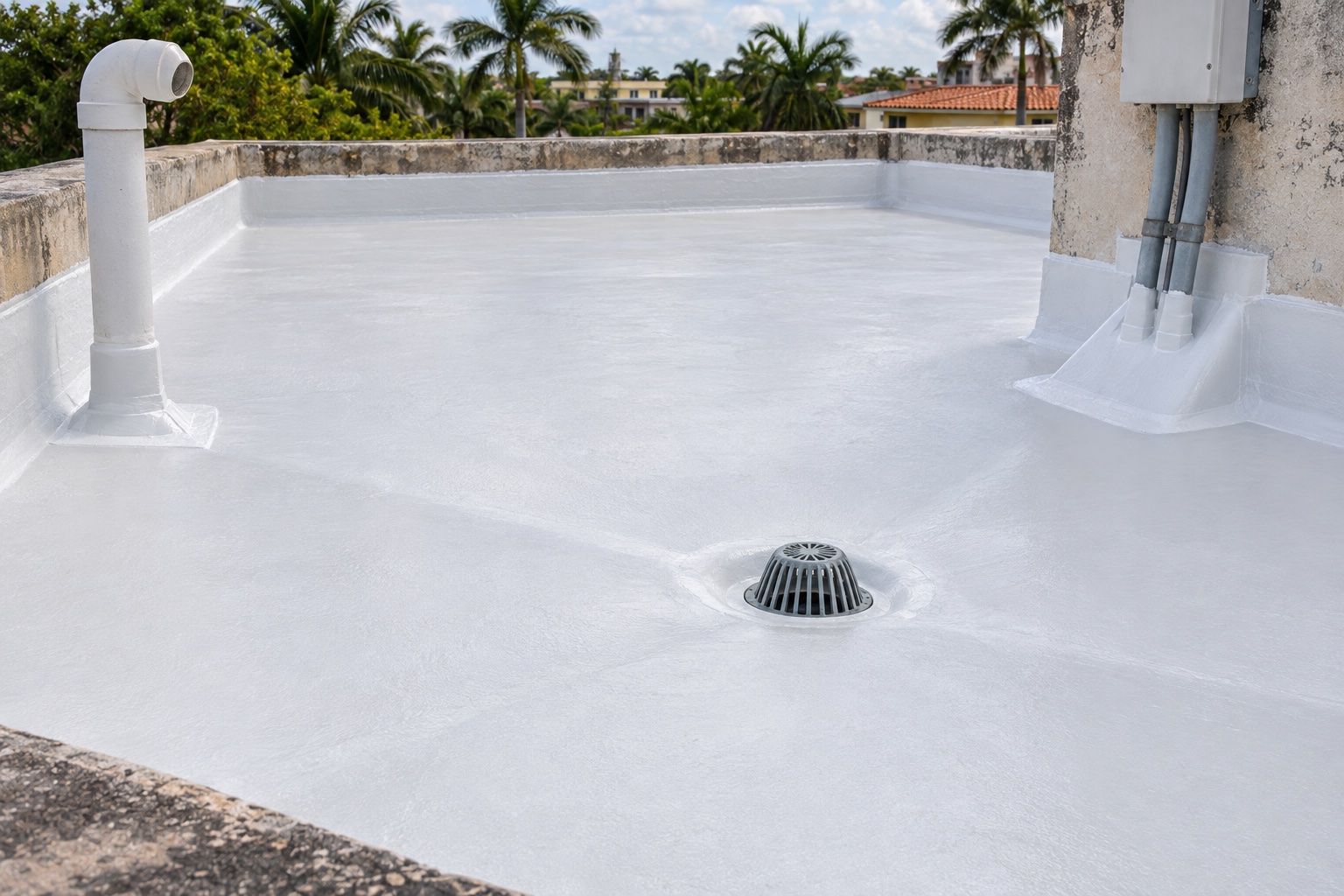
A buyer's seven-question checklist
- What is the existing roof substrate and current coating, if any?
- Is the roof sound and dry, and where does water stand after rain?
- Which exact primer, basecoat, reinforcement and topcoat are approved together?
- What preparation is required at seams, cracks, fasteners and drains?
- What application rate and finished film build does the manufacturer specify?
- What temperature, humidity, rain and recoat windows apply on site?
- What adhesion test, sample area and handover documents will be required?
For a distributor buying for several countries, add local storage conditions, pack size, labeling language and shipping method. A product that looks right on a brochure may still be impractical if the contractor cannot meet its weather window or system requirements. Share a roof description and photographs with the supplier before ordering full quantities.
Frequently asked questions
Is water-based roof coating always safer?
It can avoid some solvent-handling issues, but “water-based” alone is not a complete safety assessment. Read the selected product's safety data sheet and follow its handling instructions.
Does oil-based coating last longer?
There is no reliable answer from that label. Service life depends on the specific coating system, substrate, preparation, film build, roof conditions and maintenance.
Can I coat over an old roof membrane?
Possibly, if the roof and coating manufacturer approve the combination. Identify the membrane, repair defects and perform the specified adhesion and compatibility checks.
Will a roof coating fix ponding water?
A coating does not create drainage. Address the source of ponding and use only a system explicitly approved for the remaining exposure.
Choosing a roof coating for a project?
Send SZSTRONG the roof substrate, current surface, site climate, problem areas and desired pack size. We can help identify the product information and sample checks needed before a bulk order.
Discuss your roof coating brief