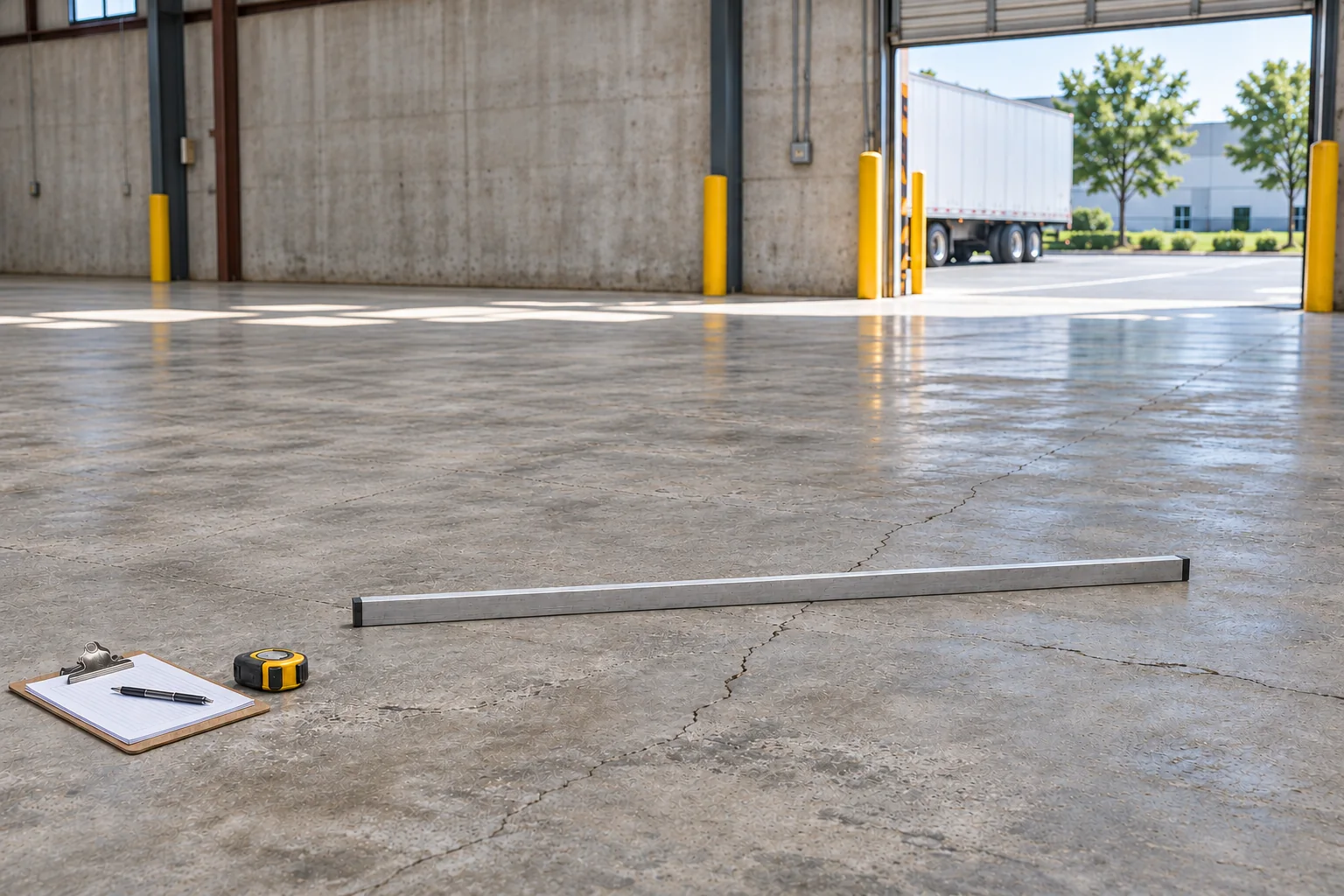
Quick answer. Epoxy flooring is a protective resin finish laid over concrete. Most systems use a resin and hardener mixed just before application. Once cured, they form a hard, continuous surface. A simple coating, a thicker self-leveling floor and a textured floor are all called “epoxy flooring”, but they suit different jobs.
What is epoxy flooring?
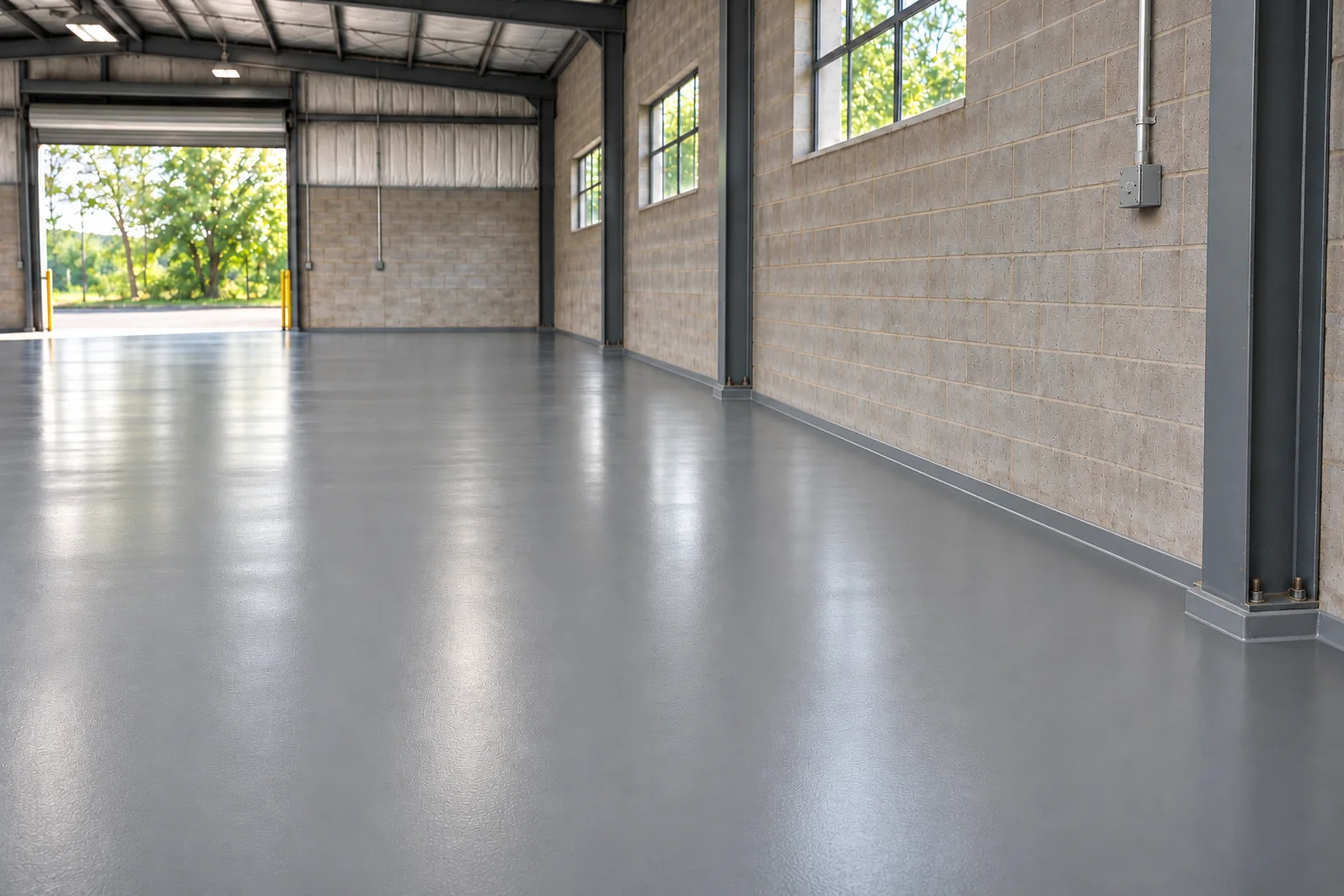
Picture a busy warehouse floor. Bare concrete can shed dust, absorb spills and become hard to clean. An epoxy system adds a sealed surface above that concrete. The result can be smooth and easy to wipe down, or textured where extra grip is needed.
The concrete still does the heavy work. Epoxy does not repair a weak slab by itself. The floor must be clean and sound before any coating goes on. That is why two floors with the same gray finish can perform very differently: the preparation and the layers underneath may not be the same.
Coating, self-leveling floor or textured finish?
Ask what will happen on the floor each day. A stockroom with foot traffic has different needs from a workshop with trolleys, oil and frequent washing. The table below is a simple way to start the conversation with an installer or supplier.
| Floor use | Finish to consider | Ask about |
|---|---|---|
| Light traffic and routine cleaning | Roller-applied epoxy coating | Concrete condition and number of coats |
| Regular wheeled traffic | Heavier coating or thicker system | Wear, thickness and maintenance |
| Wet or sloped area | Textured finish | Grip when wet and cleaning method |
| Spills or chemicals | System selected for that exposure | Which liquids, how often and for how long |
There is no need to choose by shine alone. A glossy floor may look tidy in a photo, but it tells you little about grip or wear. Start with use, then choose the finish.
Check the concrete before buying the coating
Walk the floor in good light. Mark cracks, loose areas, old paint, oil stains and joints. Rub a hand over the surface: heavy dusting is a warning sign. If the slab feels damp or has a history of moisture, have it checked before work starts. Moisture trapped under a coating can cause trouble later.
The usual next steps are cleaning, grinding where needed, repairing damaged spots and removing dust. The installer may use a primer before the epoxy layers. Do not cover a moving joint with a rigid finish and hope it will disappear; it needs its own detail. A small sample area can show how the chosen system looks on the actual floor.
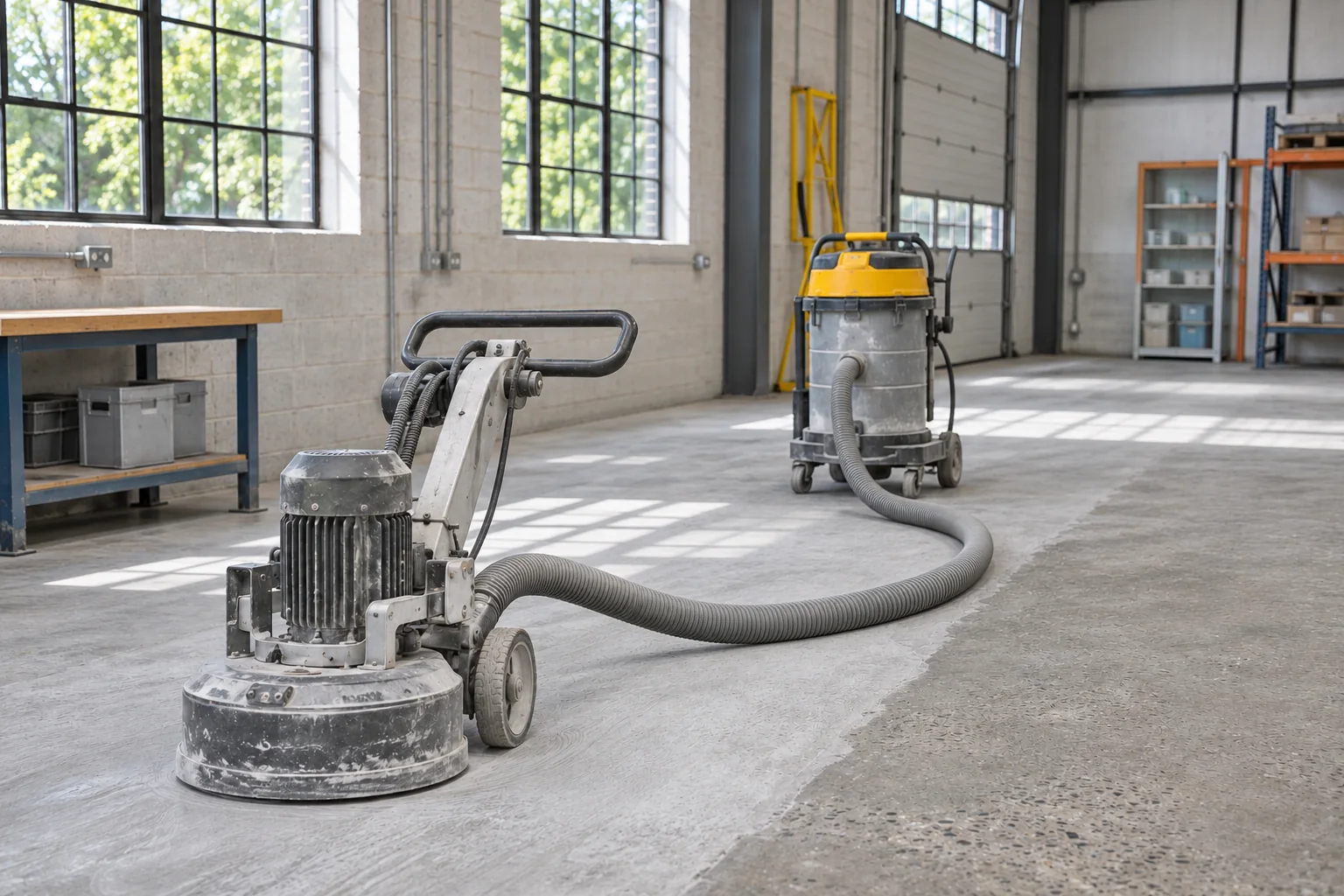
Where is an epoxy floor useful?
Warehouses, garages, workshops, storage rooms and service corridors are common places to consider epoxy. A continuous surface is easier to sweep and clean than dusty concrete. It can also make a work area look brighter and more organized.
Match the system to the place. A garage needs a finish that can handle tires and cleaning. A loading area must cope with heavier traffic. A food-preparation room may need a specific cleaning routine and floor texture. If the area is outdoors or regularly exposed to sun, ask for a system suited to that setting rather than assuming every epoxy floor is the same.
How is the floor installed?
The order is straightforward: inspect the slab, prepare it, repair defects, clean away dust, then apply the specified primer and epoxy layers. The crew mixes the components in the ratio given for that product and works in sections while the mix is usable. Each layer needs the right time before the next one goes on.
Before people or vehicles return, check the cure time for the actual site temperature. Look closely at wall edges, drains and columns as well as the open floor. Keep a record of the products used and photograph the finished area. Those details make future repairs and repeat orders easier.
What should a buyer send to the supplier?
A useful enquiry is short and specific. Tell the supplier the floor area, the condition of the concrete, daily traffic, likely spills, cleaning method, desired finish and how long the space can stay closed. Add your destination market and preferred pack size if you are buying for distribution.
Then compare the full proposal: surface preparation, primer, epoxy layers, coverage, curing time and maintenance. Our epoxy floor coating page is a starting point for discussing the right product and pack format. If you are stocking a range, ask for a sample and product information before placing a larger order.
Common questions
Is epoxy flooring the same as epoxy floor paint?
People often use the terms together. “Epoxy flooring” can mean several layers and finishes; “floor paint” usually means a thinner coating. Ask what layers and thickness are included in the quote.
Can I apply epoxy over old paint?
First check whether the old paint is firmly attached and whether the new product can go over it. Peeling paint must be removed. A test patch helps show whether the new finish bonds properly.
Is a shiny floor slippery?
It can be, especially when wet. Tell the supplier how the floor will be used and ask for a suitable texture if grip matters.
Planning an epoxy floor?
Send us the floor size, concrete condition, daily use and destination. We will help you choose a product range to compare.
Ask SZSTRONG about epoxy floors
About the author · Hemy
Hemy works with buyers at SZ Strongs in Yiwu, China. He helps them choose paint, adhesive and coating products. Send him the floor use, quantity and destination when you have a project in mind.