
Start with the wall that gives the room its focus. Choose the pattern scale from the main viewing position, carry one of its colours into the furniture or textiles, then check a sample in daylight and evening light. Measure the wall and plan the pattern alignment before deciding how many rolls to order.
Give the wallpaper a clear place in the room
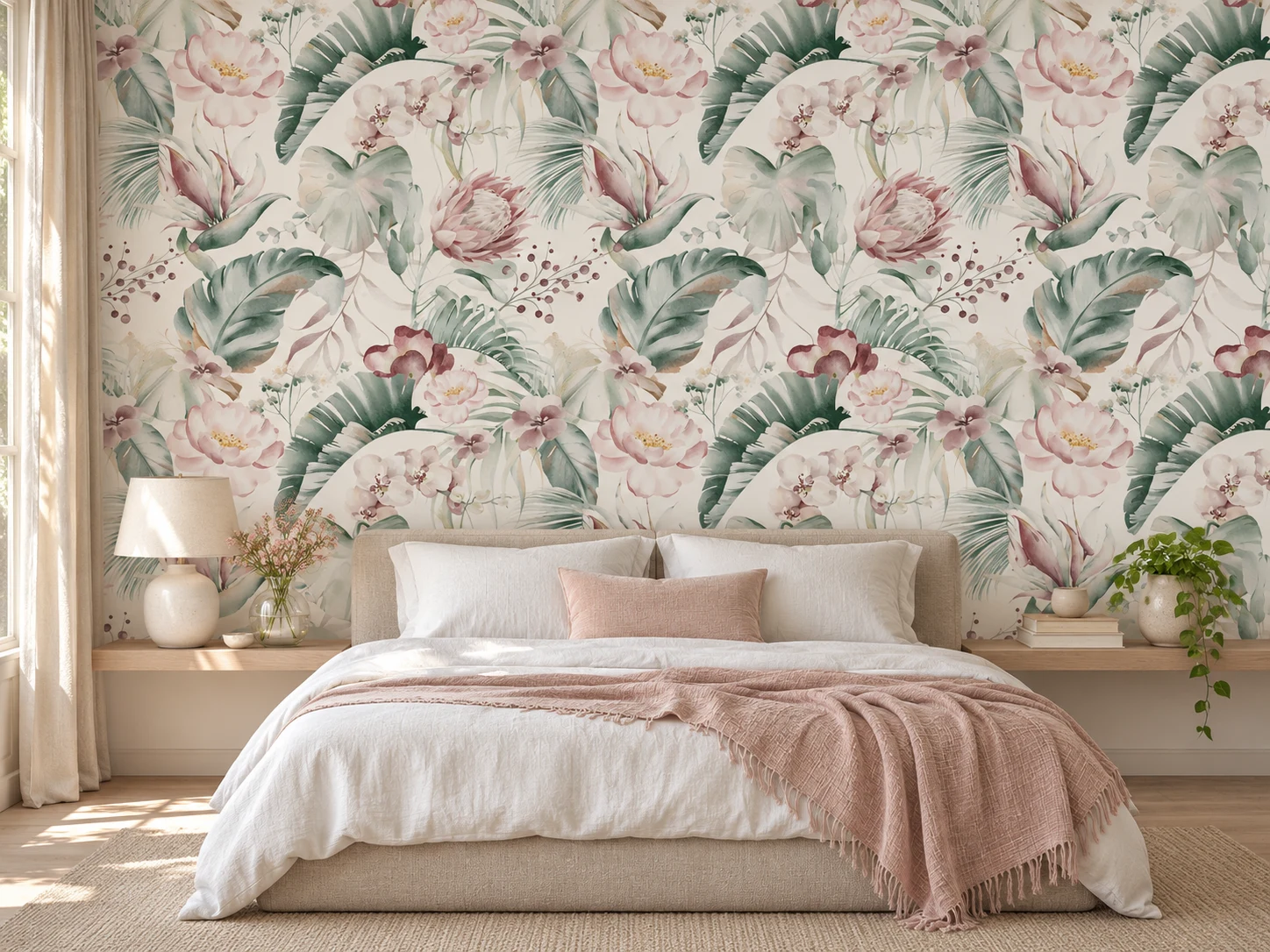
Stand in the doorway before looking through patterns. In a bedroom, the headboard wall often provides a clear composition. In a living room, a wall behind a sofa can work better than one broken by several doors. A dining nook may need only the wall above a bench. The useful question is where the pattern will be seen, rather than how many surfaces can be covered.
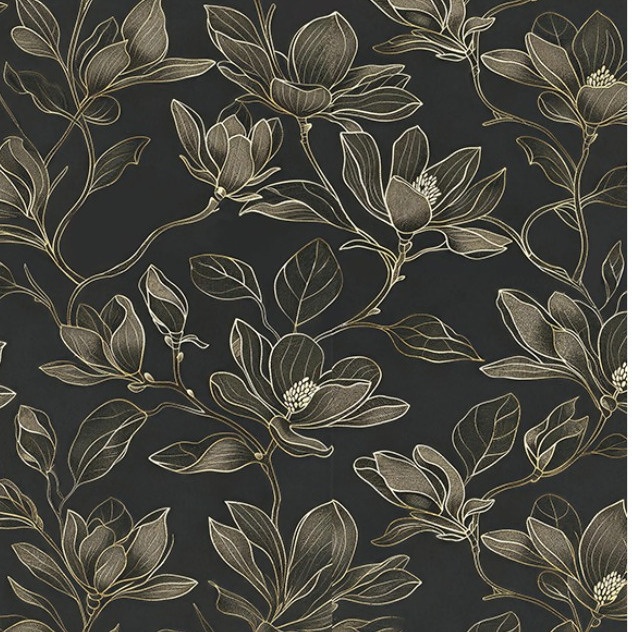
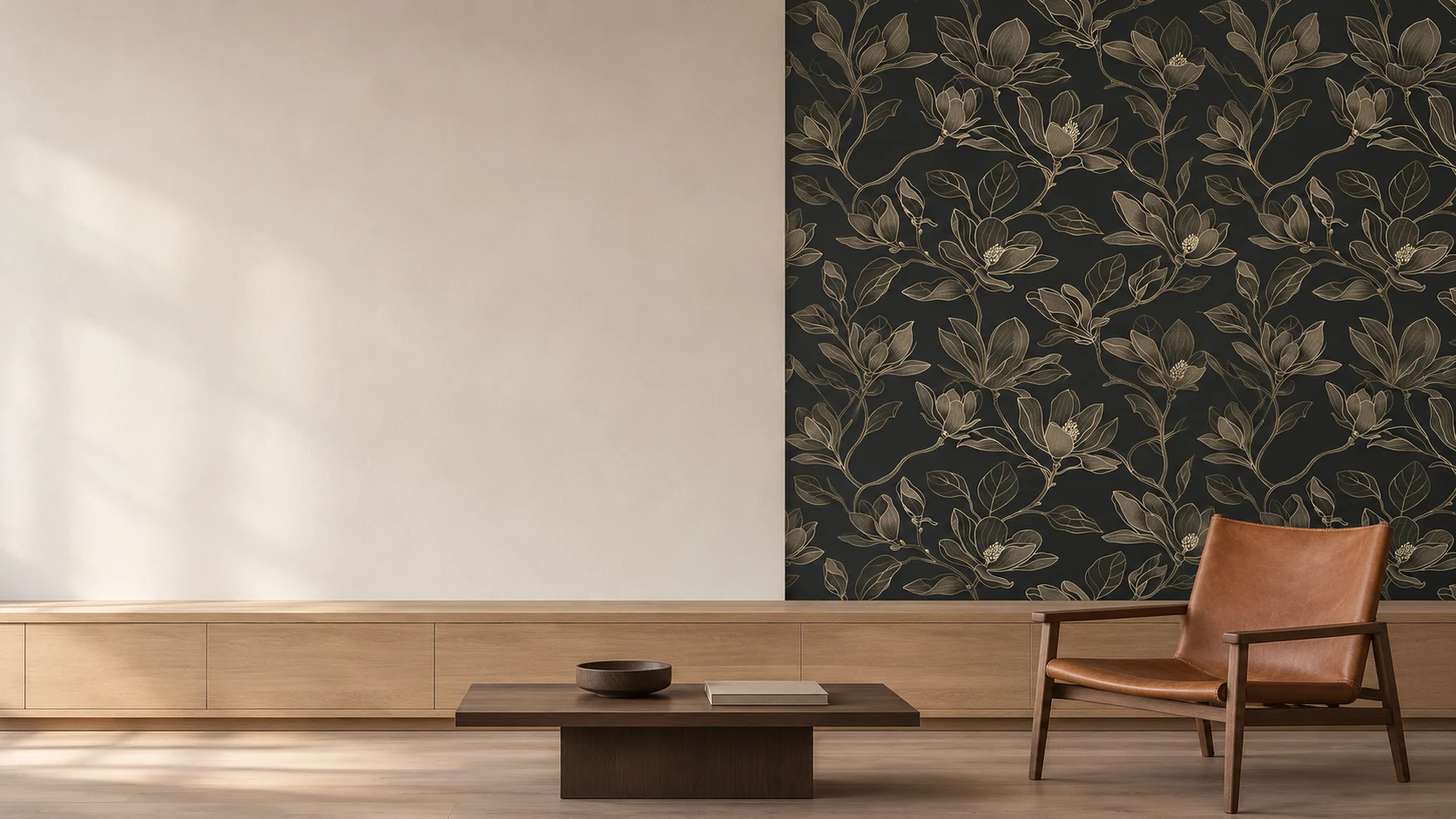
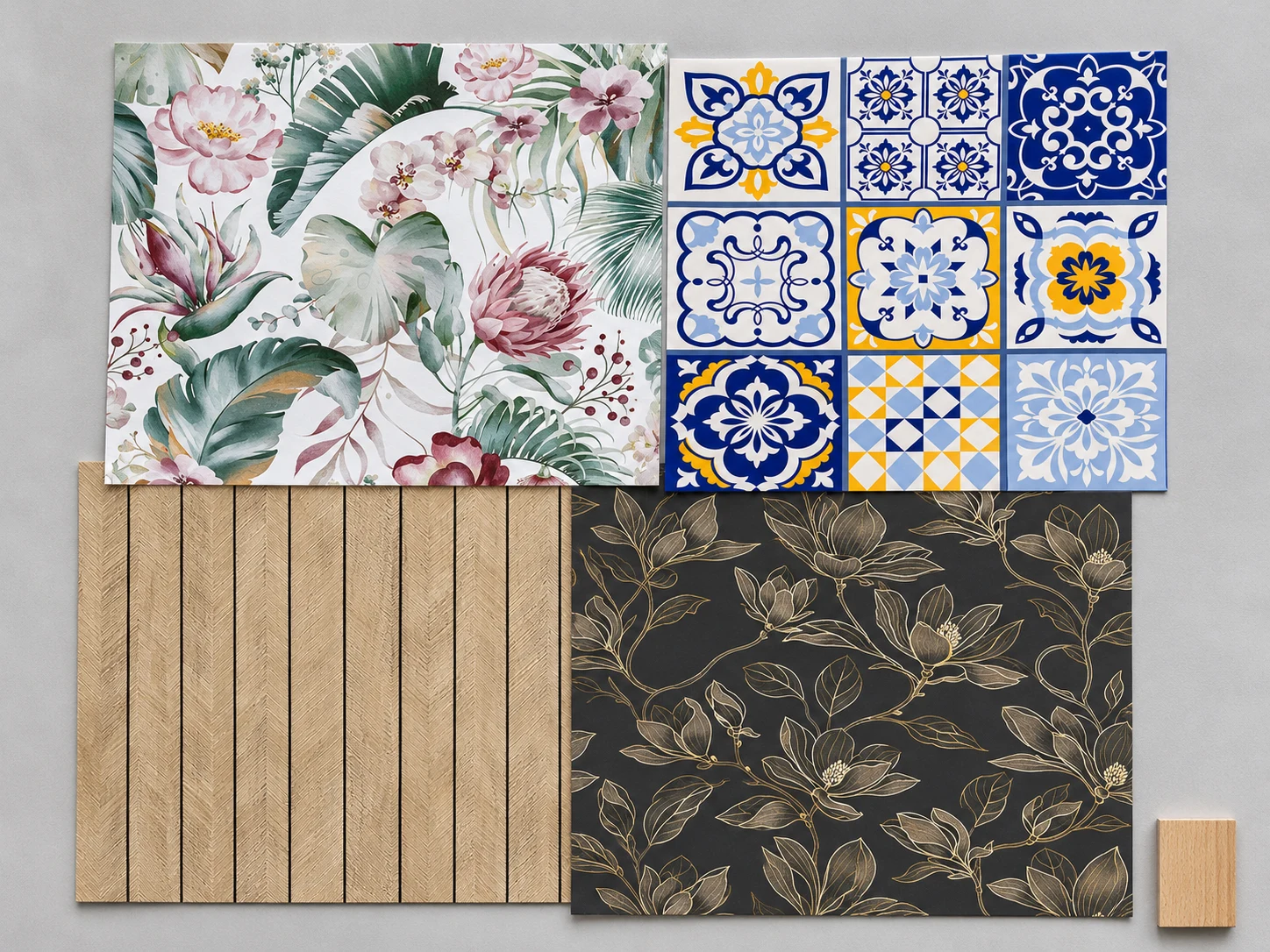
Decide whether that wall should lead the room or sit quietly behind it. Dark botanical linework, such as reference 5113A, gives a reading corner a defined backdrop. A pale floral can soften a bedroom without asking every cushion and curtain to become part of the same print. Keep the surrounding surfaces simple while you compare the two directions.
Read the pattern at the distance you will see it
A close-up tells you about the drawing; a room view tells you about its rhythm. Look at the design from the sofa, the bed or the dining table. Then look closer at edges, small details and background colour. A large flower partly hidden behind a tall cabinet creates a different composition from the same flower on an open wall.
Do not rule out a generous motif just because a room is small. A restrained room can carry a bold wall, while a busy room may need a quieter repeat. When the curtains or rug already have a pattern, compare their scale with the wallpaper. Two equally prominent, similarly sized prints can compete; a fine line beside a broader shape is often easier to arrange.
Build the palette from what is already staying
Start with the floor, sofa, cabinetry and other pieces that will remain. Place the wallpaper sample beside them. Pull one colour from the print into a plain cushion, lamp shade or curtain, and let the remaining colours stay in the wall. A room can feel connected without matching every item.
Move the sample to the intended wall and look again in the evening. A pale background near warm timber can read differently beside a cool white cabinet. Photograph the combination to keep a record, then return to the physical sample for the final colour decision. Compare candidates in the same position rather than choosing one in a bright window and another across the room.
Choose a design family for the space
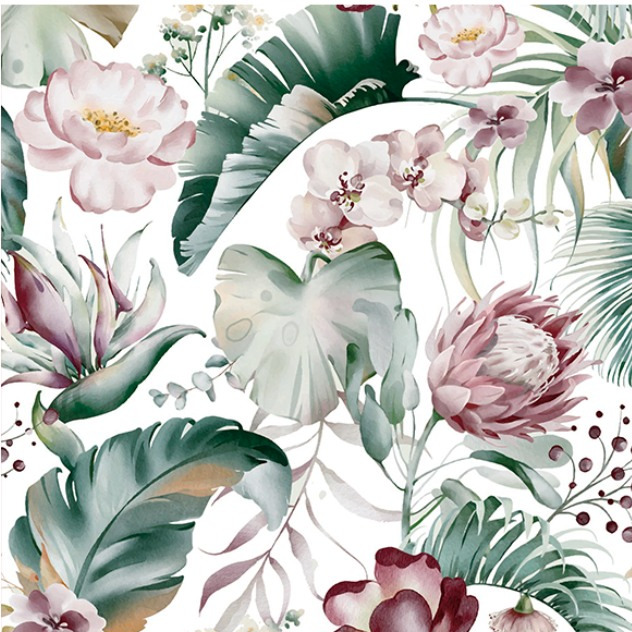
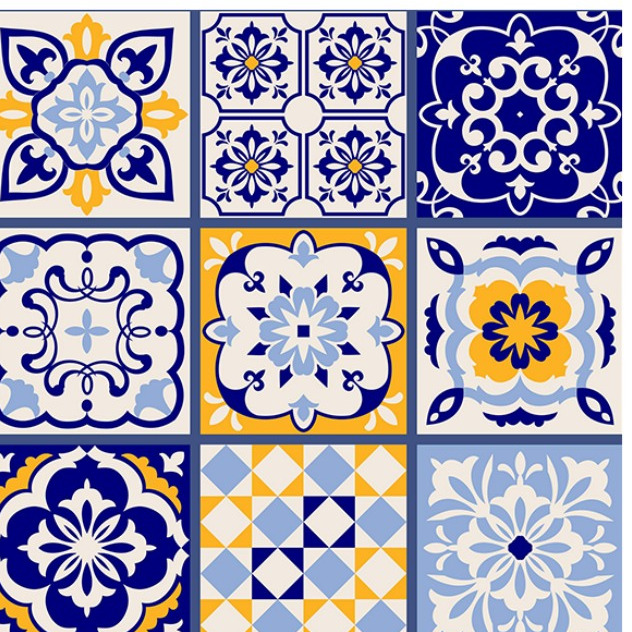
Use the following directions to make a shortlist. Watercolour Floral 5061A combines broad flowers and foliage for a bedroom wall. Botanical Linework 5113A gives a darker, more graphic option. Blue Porcelain Tile 2033 brings a blue-and-white printed tile effect to a dry dining area. These are different visual treatments, so compare the whole wall before picking the reference.
For children’s rooms, decide whether the wall should remain a background or become the main illustration. Small elephants and stars leave room for toys and changing textiles; larger woodland drawings create a more visible theme. Choose the print with the room’s furniture and layout in mind, then keep the product code with the sample so the selected design is easy to identify later.
| Direction | Room idea | Pair it with |
|---|---|---|
| Watercolour floral | Headboard wall | Plain linen and pale timber |
| Fine botanical linework | Reading corner or living room | Oak, leather and calm upholstery |
| Blue printed tile effect | Dry dining nook | Simple cabinetry and warm wood |
| Small animal motifs | Children’s bedroom | Plain curtains and flexible storage |
Plan the wall before calculating rolls
Measure the wall height in several places and record doors, windows, sockets and large furniture. Mark the position of the main motif on a simple sketch. For a symmetrical headboard wall, compare a centred flower or shape with the positions of the seams. Planning on paper is easier than finding a narrow strip beside the focal point during installation.
SZ-Strong’s self-adhesive rolls are 3 m long, with widths of 40, 60, 80 or 120 cm. A 60 cm roll has a gross area of 1.8 m². That figure does not tell you how many matched drops it will yield: wall height, trimming and the vertical repeat determine the cutting plan. Establish the repeat and seam method for the chosen code before converting the layout into rolls.
Brewster Home Fashions: pattern repeats and matches
Turn the shortlist into a collection
For a retailer or distributor, arrange the range by role: a floral statement, a quieter botanical, a geometric option and a printed wood or tile effect. Add a children’s print if it fits your customers. This gives buyers distinct choices and makes it easier to explain where each design belongs.
Send the chosen codes with widths and cartons on separate lines. The wallpaper minimum is 20 cartons per design; rolls per carton can be arranged for the order. Include your Canadian receiving postal code and any retail-pack requirements. Use the full PDF pattern book to compare the remaining designs before closing the selection.
Common questions
How do I choose wallpaper for a living room?
Choose the wall from the main seating position, then compare the print with the sofa, floor and curtains. Use a sample to judge the background colour and contrast in the room’s actual light.
Can a small room have a large wallpaper pattern?
Yes. Look at the visible wall, furniture and other patterns together. A clear feature wall with simple furnishings can carry a larger motif; check how the drawing falls around furniture and openings.
Does a tile-effect wallpaper replace a tile surface?
It provides a printed decorative look. For the dining-nook idea shown here, select a dry wall away from direct splashes and cooking heat.
Explore the selection