
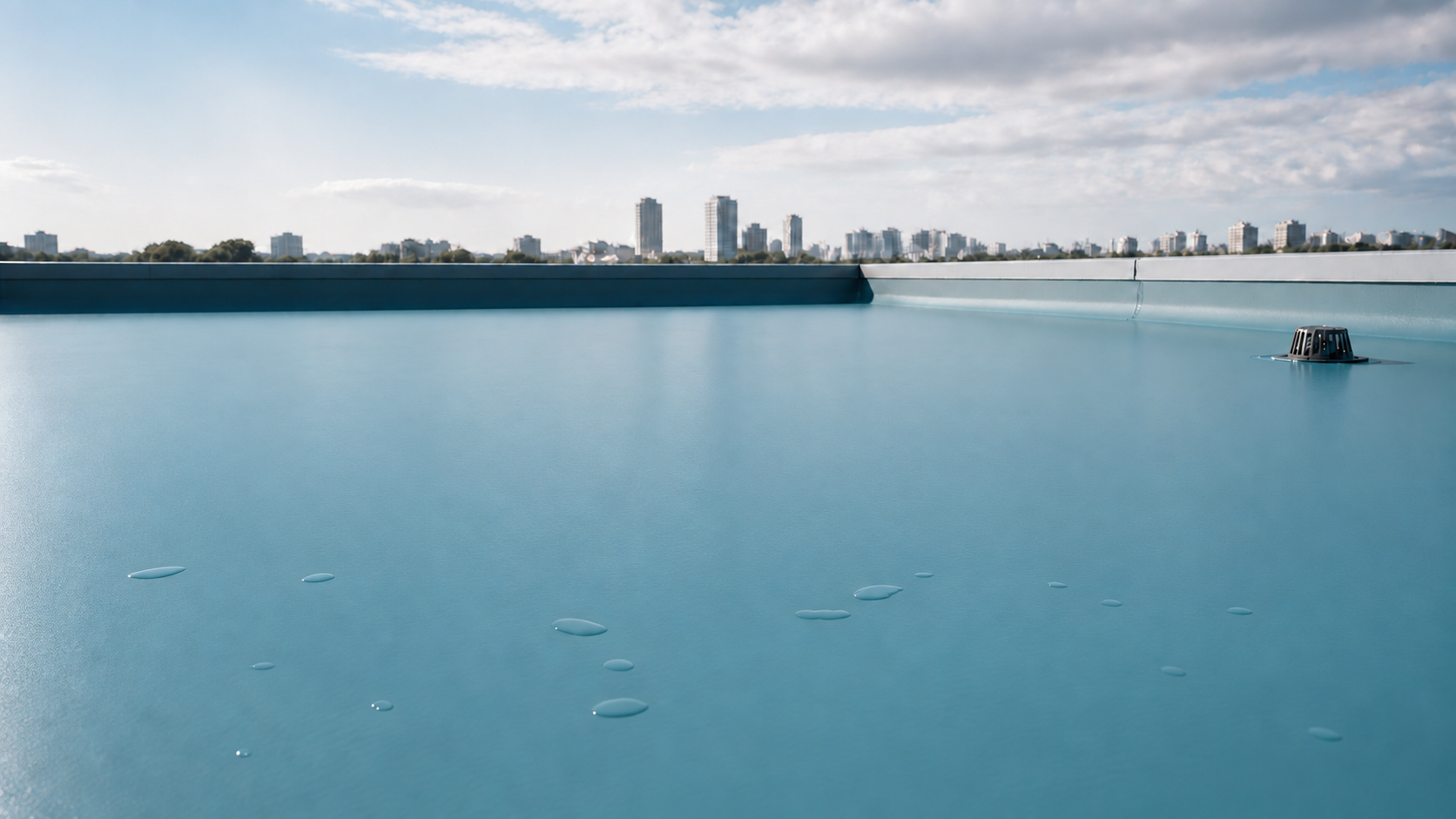
Choose a roof coating around the existing roof and the complete application system. Identify the surface and earlier treatments, check how water drains, then establish preparation, primer, detailing and coating thickness. In Canada, plan the delivery, storage and curing window together. A pail price becomes useful once the material requirement for the roof is clear.
Identify what is on the roof today
A bare concrete roof, a coated metal roof and an older membrane need different starting information. Record the visible surface, previous repairs, flaking areas and any known treatment. Take an overall photograph and close views of a representative sound area, a damaged area and the roof edge. Keep these images together rather than sending only the place where water appears inside the building.
Check whether the existing assembly is suitable for a coating refurbishment. Loose material and trapped moisture need attention before a new film is applied. A coating selection starts with adhesion to a prepared, sound base; spreading more material over a weak layer leaves that weak layer in the system. Have the roof condition assessed before fixing the scope of the work.
Look at drainage as well as the leak
Mark drains, low spots, gutters, upstands and penetrations on a roof sketch. Look for evidence of water remaining after rain, and note where debris gathers. A photograph taken immediately after rain answers a different question from one taken after the roof has dried. Keep the observation time with the photograph so the person reviewing the roof can interpret it.
Ponding-water performance is a system-specific selection point. Some acrylic systems have restrictions in areas that retain water; other systems address those conditions through their own specified build-up. Resolve drainage defects and select the coating for the actual exposure. The word waterproof on a product category does not describe the condition of every roof it might be applied to.
Compare the whole coating system
Liquid-applied roof systems include different chemistries, among them acrylic, silicone and polyurethane. The family name is a starting point for reviewing suitable substrates, primers, reinforcement, application limits and service conditions. Choose the documented system for the job before comparing the appearance of the finished surface.
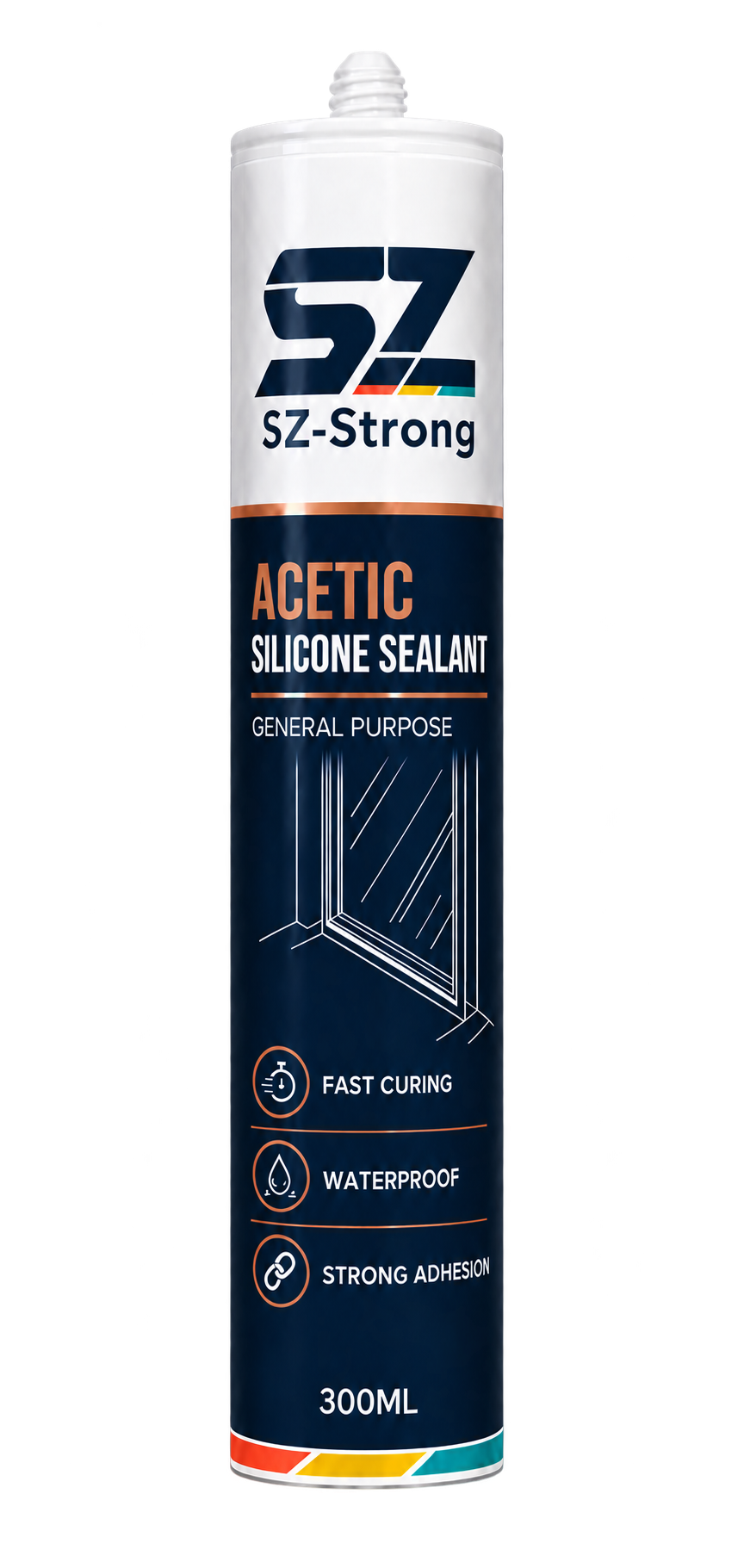
Keep the field coating and the detail materials on separate order lines. A broad roof area, a pipe penetration and a moving joint can need different preparation and materials. Plan how those parts connect. A generic window-sealant cartridge is a separate product from a specified roof-detail treatment, even if both are described in conversation as sealing a leak.
| Part of the work | Record | Material decision |
|---|---|---|
| Main roof area | Substrate, existing treatment and measured area | Preparation, primer and field-coating build |
| Drains and upstands | Dimensions and existing detail condition | Detail treatment and reinforcement |
| Movement joints | Joint type and movement requirement | Compatible joint detail within the system |
| Receiving and storage | Destination, season and available storage | Packaging and handling arrangements |
Plan around roof temperature and the curing window
For a Canadian project, connect the buying schedule to the installation season. Ask for the permitted substrate and air temperatures, moisture limits, recoat interval and time before weather exposure for the chosen system. Review the forecast across the curing period, including overnight conditions. A mild afternoon does not describe the full application window.
Keep receiving and storage in the same conversation. A water-based product may need protection from freezing, including at terminals, during local delivery and before use. Obtain the storage conditions for the supplied reference and arrange a suitable place before the goods arrive. Match the delivery timing to the period in which the team can store and apply the material properly.
Turn the measured area into a material schedule
Measure the main area and record upstands and details separately. Use the selected system’s stated consumption for each layer, then convert that quantity into complete supply packs. Keep the unit visible: kg per square metre, litres per square metre and coverage per pail are different ways of expressing a requirement. Use the supplied density only when a mass-to-volume conversion is needed.
For example, a hypothetical 120 m² area at a specified total consumption of 1.5 kg/m² requires 180 kg before the separately assessed details and application allowance. In 20 kg pails, that is nine pails. For your order, use the stated consumption of the chosen grade and roof system.
Ask how the application team will control the prescribed coating build. Record the area treated and the quantity used by layer. A wet-film check, where specified, and a simple consumption record help reveal a coat spread too thinly. Comparing pail prices while leaving the required film build undefined makes the offers hard to assess.
Select the pack after the roof brief is complete
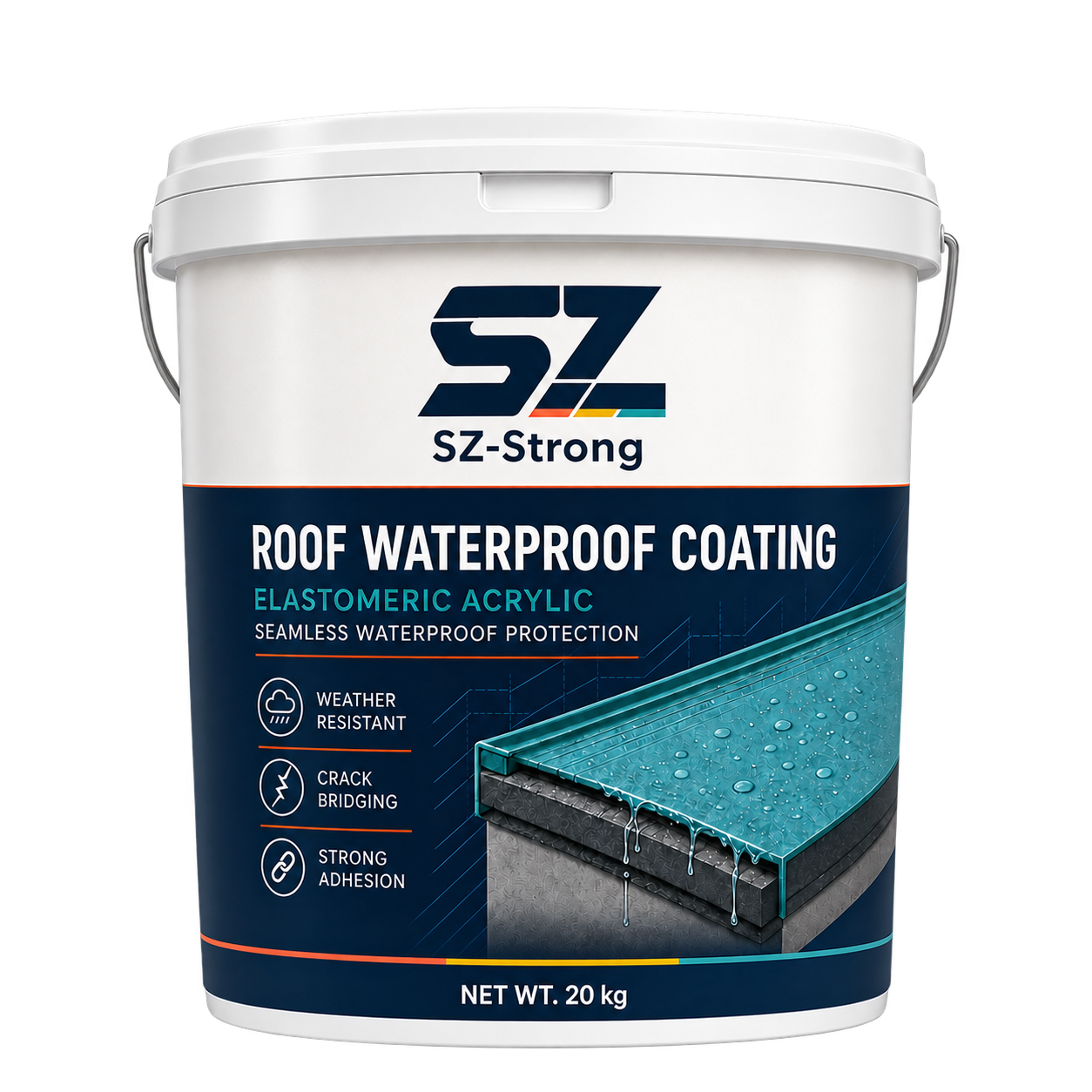
SZ-Strong’s roof waterproof coating range lists 10 kg and 20 kg pails. Send the roof substrate, existing treatment, measured area and Canadian destination with the enquiry. Add photographs of drains, perimeter details and repairs. This lets the discussion cover the main coating and the parts that determine how the roof is finished.
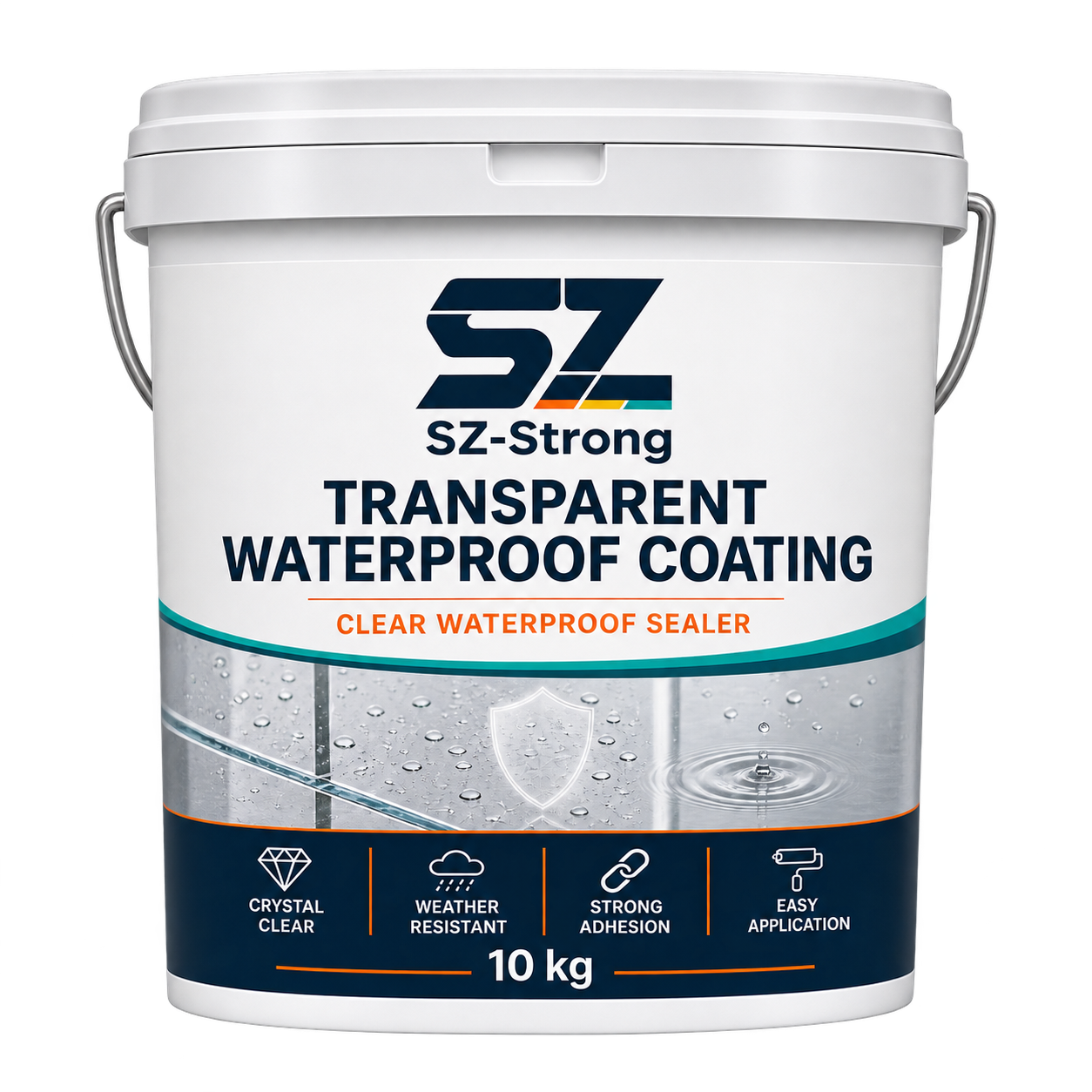
For distribution, separate project supply from shelf replenishment. State which pail formats you want to carry, quantities by reference and label requirements. Keep roof coatings, transparent waterproof coatings and joint sealants as distinct lines with their own application information. A clear range is easier to present to a contractor and easier to reorder.
Common questions
Is roof coating the same as waterproof paint?
The names can overlap in catalogues. Compare the intended roof surface and the documented system: preparation, layers, film build and exposure. The product name alone does not define that specification.
Can a roof coating be applied in winter?
Use the application and cure limits of the selected system, including substrate conditions and overnight weather. Schedule the work for a suitable window and keep the delivered material within its storage conditions.
How many pails do I need?
Calculate each specified layer from its consumption and measured area, include the assessed details and allowance, then round up to complete packs. Keep primer and detail products on separate lines.
Explore the selection