

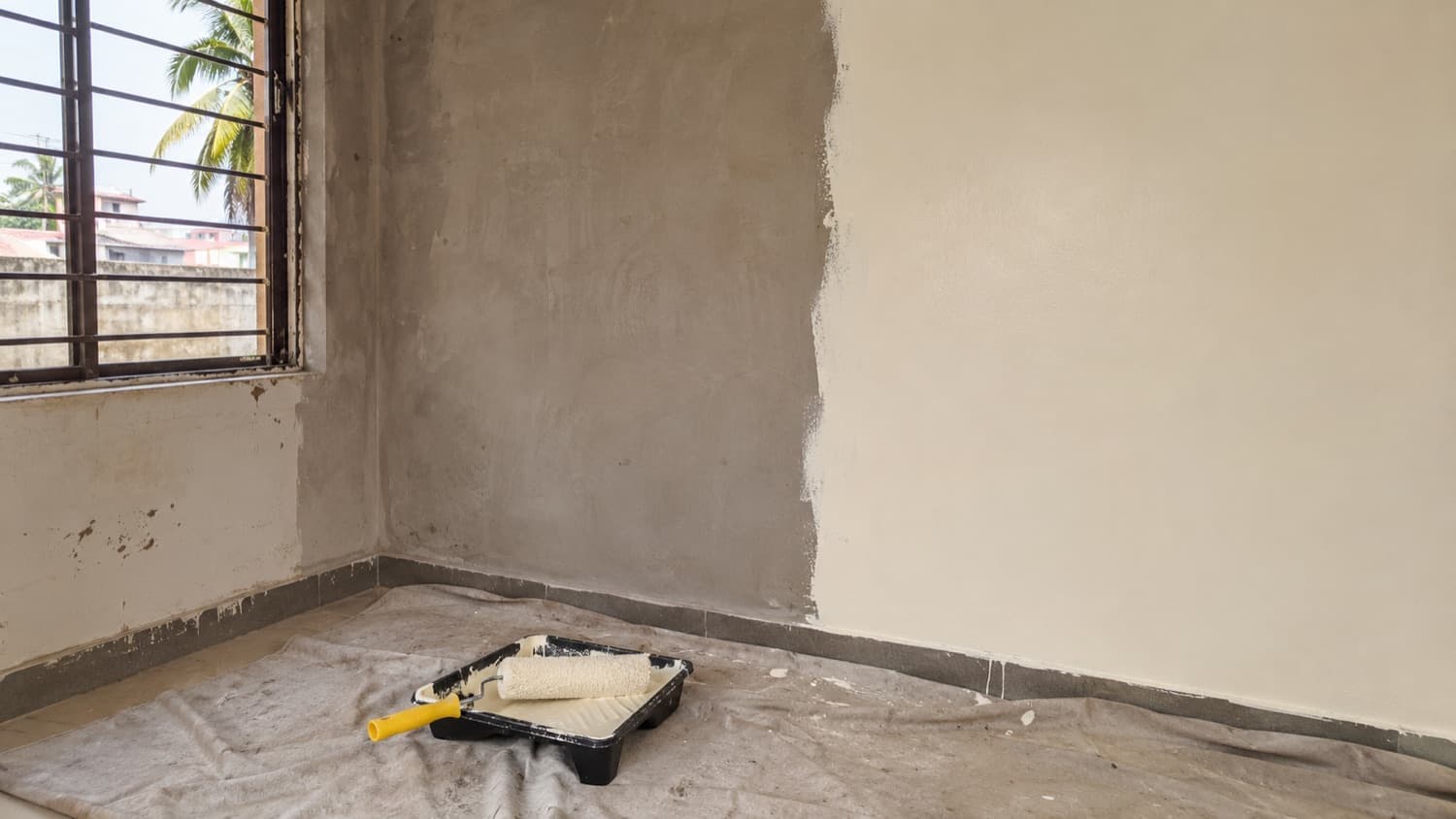
First, find out what the bucket contains
When someone asks about the price of a bucket of paint in Ghana, the word “bucket” leaves out the detail that matters most. It could hold interior emulsion, a washable wall finish, roof coating or another product entirely. Two buckets may also have different capacities. Start with the exact product name, intended surface, finish and stated contents before comparing the figures on a quote.
For an interior bedroom or living room, compare emulsion wall paint with other interior wall paints of the same class. If the wall will be cleaned regularly, put washable interior wall paint on a separate line. A roof coating or epoxy floor paint belongs to a different job and needs its own specification. This sorting step prevents a cheap but unsuitable product from looking like a bargain.
Ask the seller to write the capacity in litres or the supplied mass in kilograms. Do not treat an 18 L wall-paint pail and a 20 kg preparation product as equal-sized paint buckets. Keep the unit beside every quoted price.
Check the wall before estimating paint
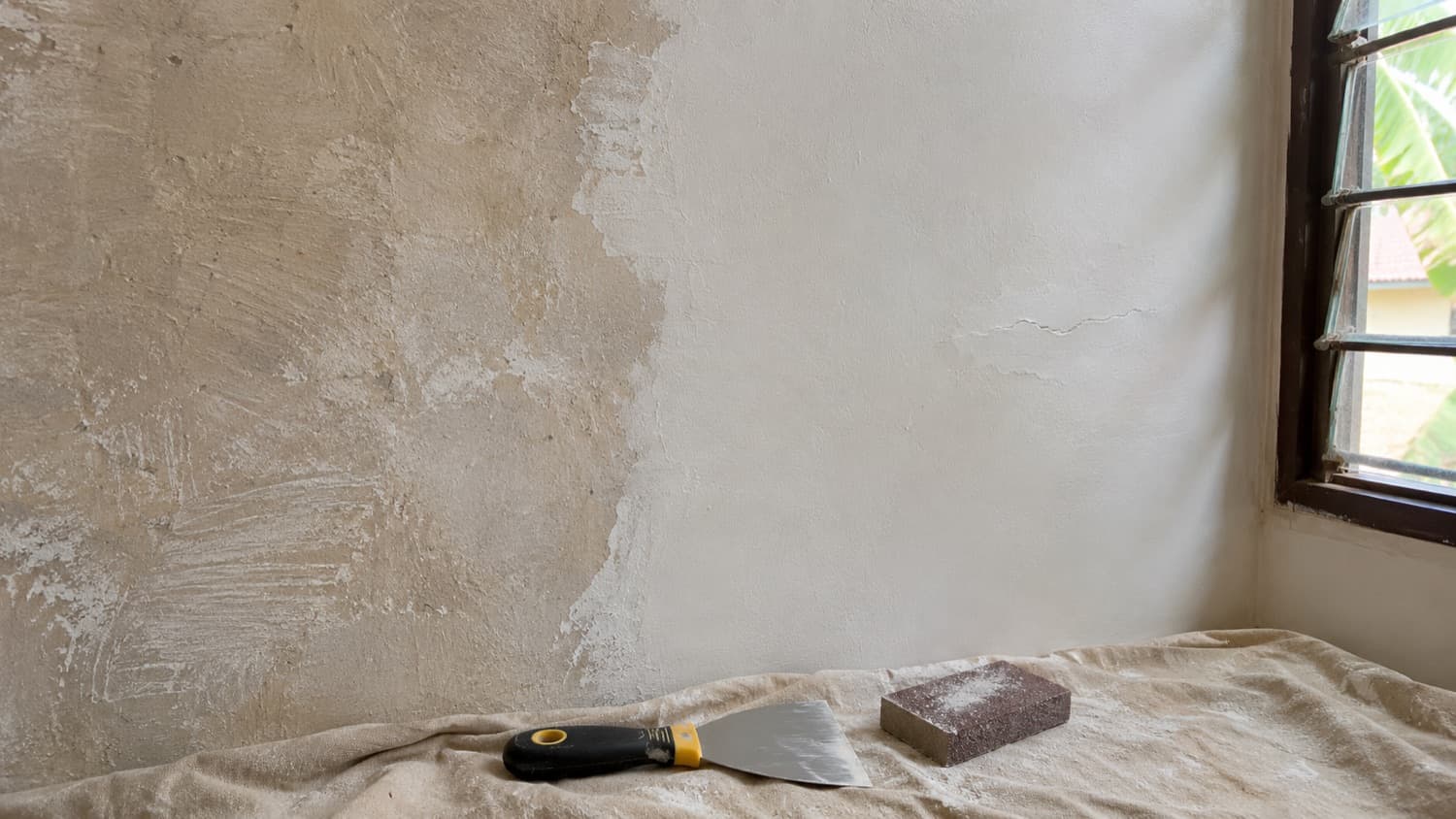
A fresh, sound wall and an old wall with loose paint do not use materials in the same way. Look for powdery plaster, peeling edges, cracks, stains and areas repaired with filler. Remove unstable material and agree the preparation method before estimating the finishing paint. If water is coming through the wall, find and correct the cause before decorating over the mark.
A rough or very absorbent surface may call for more preparation and a different amount of coating than a smooth, sealed test area. Ready-mixed wall putty can smooth a suitable prepared surface; a deep penetrating wall sealer has a different job. Neither should be hidden inside the price of the finishing paint. Put each material on its own line, with its pack size and intended use.
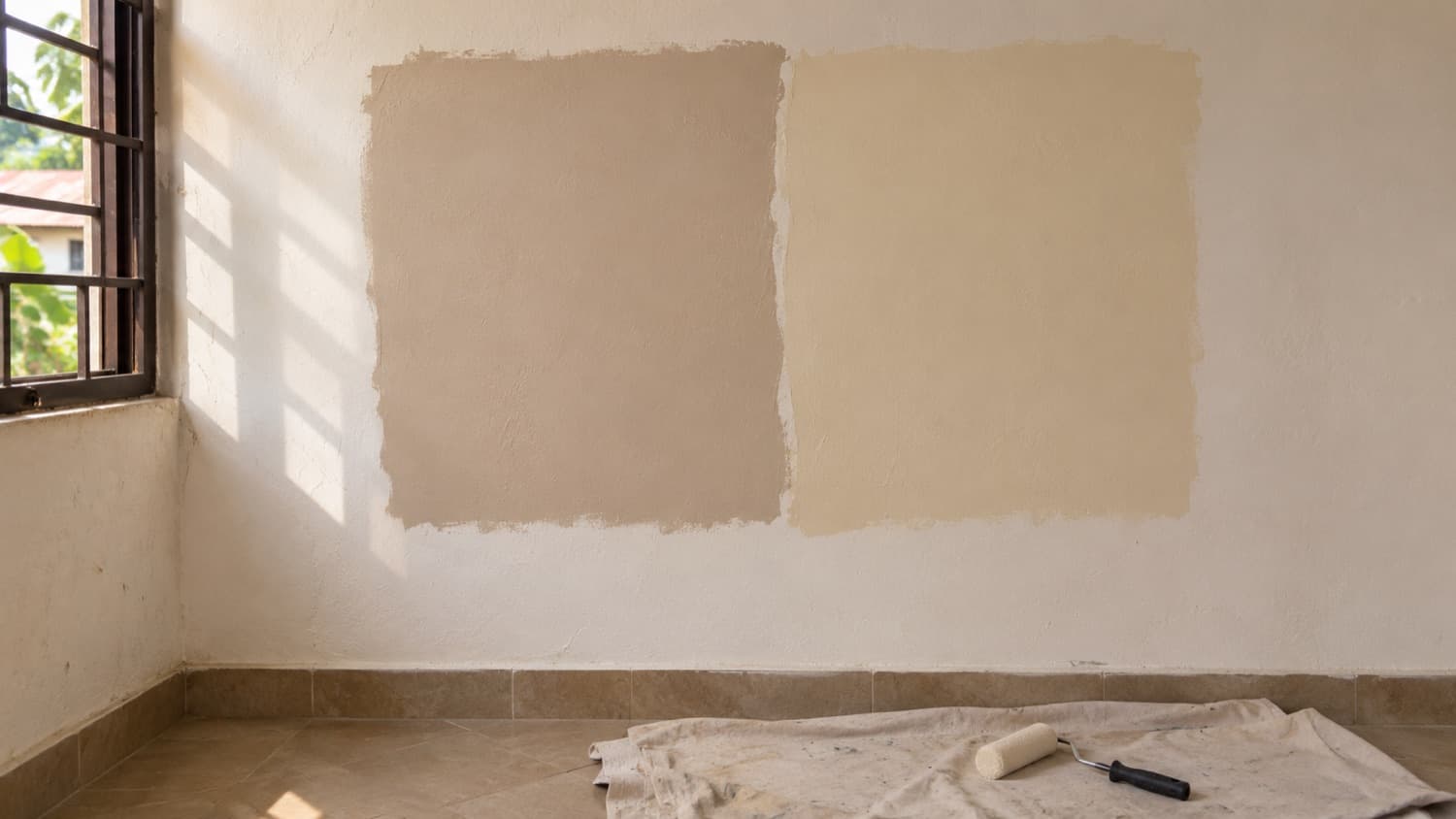
A small sample area tells you more than a catalogue picture. Prepare it as the full wall will be prepared, apply the proposed coating sequence and inspect the dry result. That sample helps the decorator and buyer agree on appearance before ordering every pail.
Work out the cost for the finished area
Measure each wall, then subtract doors and windows where appropriate. Use the coverage stated for the exact paint and the actual prepared surface. If coverage is given as square metres per litre per coat, divide the paintable area by that figure and multiply by the planned number of coats. Add an allowance for edges, texture and application losses rather than assuming every litre reaches the flat wall.
Take a measured 90 m² of paintable wall as an example. If the chosen product states 10 m² per litre for one coat on the prepared surface, two coats start at 18 L before the job allowance. For your project, replace that rate with the coverage stated for your chosen paint and check it against the trial area.
To compare two quotations, divide each pail price by the litres in that pail to see the price per litre. Then use the quantity required for your wall, round up to complete pails and add the separate preparation and delivery lines. Write down both the price per litre and the total for the complete order. The second figure is the one you will actually pay for the materials on the list.
Now compare complete material lists. One offer may include only the topcoat; another may include sealer, wall putty and masking tape. The total for a finished room also depends on labour and delivery, which may sit outside the material quote. Keep those lines visible so “paint price” does not hide a different scope.
Swipe sideways to read the full table →
| Item | Detail to record | Why it matters |
|---|---|---|
| Paint | Product reference, surface and finish | Keeps different paint types apart |
| Pails | Litres per pail and pail count | Shows the supplied quantity |
| Coverage | Stated rate and planned coats | Connects pails to the wall area |
| Preparation | Repairs, putty and sealer | Shows the complete material list |
| Delivery | Ghana receiving town and terms | Defines what the quoted total includes |
Compare colour and finish after they dry
Colour can look different on a phone screen, under shop lighting and on your wall. Put a small sample on the prepared surface and let it dry fully. Look at it in daylight and in the room’s evening light. A dry sample also makes it easier to judge whether the finish and sheen suit the space.
If you are buying for a shop, record the shade reference with the paint base and pail count. If you are buying for a project, keep the approved sample and note which room or wall receives that shade. This avoids a later order for “the same cream colour” being interpreted as a different product or tint.
A change in shade, sheen or washable performance can change the specification. Compare that revised product on its own terms. Do not assume that every paint of the same colour will cover, clean or wear in the same way.
What to send when asking for a Ghana paint price
A clear enquiry can be short. Say whether the job is a home, a shop or a larger project. Add the town in Ghana, the wall area, the current surface condition and the paint family you want. Include a photograph of the wall and any dry colour sample you have approved. If you need a washable finish, say how the wall will be cleaned.
For a retail order, list the paint reference, shade, pail capacity and number of pails for each colour. For a project, add the planned coats and the separate preparation products. Ask for the delivery basis and keep the same units on every quotation. A supplier can then answer the real buying question: what will this specified finish cost for this wall and this order?
SZ-Strong can help organise an emulsion wall paint or washable wall paint request alongside preparation products in our Ghana catalogue. Send measurements, receiving town and quantities through the Ghana enquiry page so the quotation follows the actual job.
Common questions
How much is a bucket of paint in Ghana?
There is no useful single price without the paint type, capacity, finish and seller’s current quotation. Compare the same product class and litres per pail, then calculate the quantity needed for your prepared wall and planned coats.
Why can a cheaper bucket cost more for the room?
A lower pail price can be offset by different coverage, more required coats or missing preparation materials. Compare the complete material list for the measured area.
Should I include putty and sealer in the paint estimate?
List them separately when the wall condition and selected system call for them. They prepare the surface; they are not extra litres of finishing paint.
Bring the next question to our team.
Bring your selected products, quantities and Ghana receiving destination into one request. Add the application and sample details so our team can answer against your buying list.
Start your Ghana enquiry