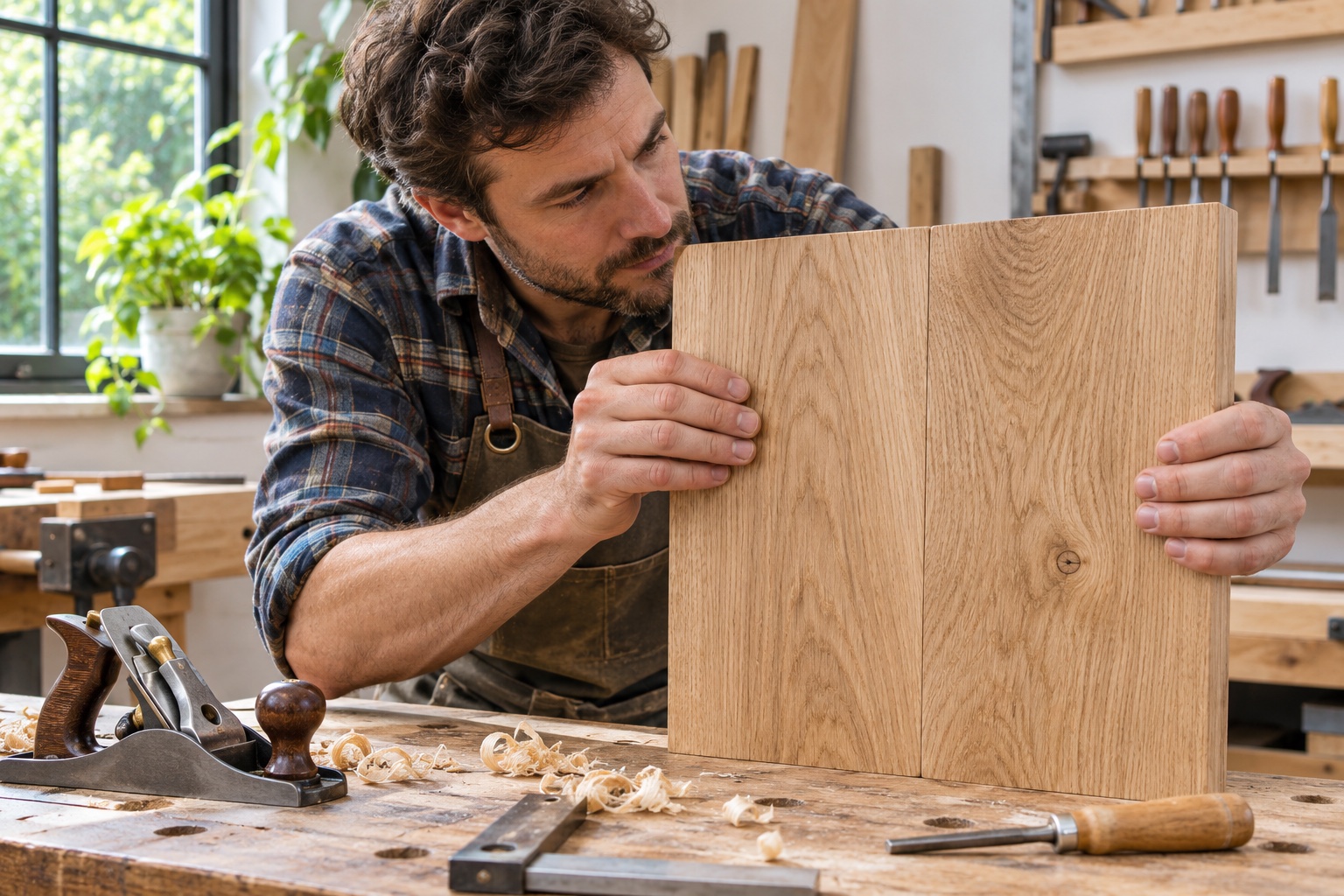
Quick answer. Many wood glues are based on polyvinyl acetate, usually shortened to PVA. But “wood glue” describes a job, not one chemical formula: polyurethane, epoxy and other adhesives are also sold for wood. Conversely, a PVA craft glue is not automatically specified for structural joinery or wet service. Check the individual product’s intended use and performance rating.
What does PVA mean on a glue label?
PVA stands for polyvinyl acetate, a polymer used in many water-based adhesives. Familiar white woodworking glues often belong to this family. They are easy to spread, usually allow water cleanup before the adhesive dries and are well suited to many close-fitting wood-to-wood joints. That convenience is why PVA is so common in furniture shops, joinery work and general interior assembly.
The label is still only a starting point. Formulations differ in solids content, working time, viscosity, color after drying, moisture resistance and recommended substrates. Two bottles can both say “PVA” yet behave differently during assembly or be approved for different service conditions. When a project is important, the technical data sheet carries more weight than the broad chemical name.
There is also a language trap: “white glue,” “school glue,” “carpenter’s glue” and “wood glue” overlap in everyday speech. A general-purpose white glue may bond paper and light craft pieces, while a woodworking formulation is selected for prepared timber joints. You cannot tell the required clamping time or water-resistance level from color alone.
PVA versus wood glue: what is the difference?
Think of PVA as an ingredient family and wood glue as a use category. Some wood glues use PVA; some use other chemistry. Some PVA adhesives are made for wood, while others are sold for paper, packaging or general craft work. Asking “Is wood glue PVA?” therefore has no universal yes-or-no answer without naming the product.
For a dry indoor cabinet joint, a suitable PVA wood glue is often an efficient choice. For outdoor furniture, a frequently wet location, a wide gap or a joint involving metal as well as wood, the selection changes. Even when the label uses the word “waterproof,” read the conditions behind that claim. Resistance ratings, assembly instructions and service limits vary by product.
| Adhesive family | Typical consideration | Check before purchase |
|---|---|---|
| PVA wood glue | Close-fitting wood-to-wood joints; straightforward spreading and cleanup | Interior/exterior rating, open time, clamp time and moisture-resistance claim |
| Polyurethane adhesive | Applications calling for a different moisture-cured chemistry | Substrate preparation, expansion or cleanup instructions, exposure rating |
| Epoxy adhesive | Specific mixed-material or repair situations | Mix ratio, working time, gap-filling ability and cured-service conditions |
| Hide glue or specialty adhesive | Restoration or a process with particular assembly needs | Compatibility with the repair method and required reversibility |
These are broad families, not interchangeable specifications. Use the product sheet for the actual adhesive and, where required, test a sample joint under the project's conditions.
Choose by the job, not the bottle color
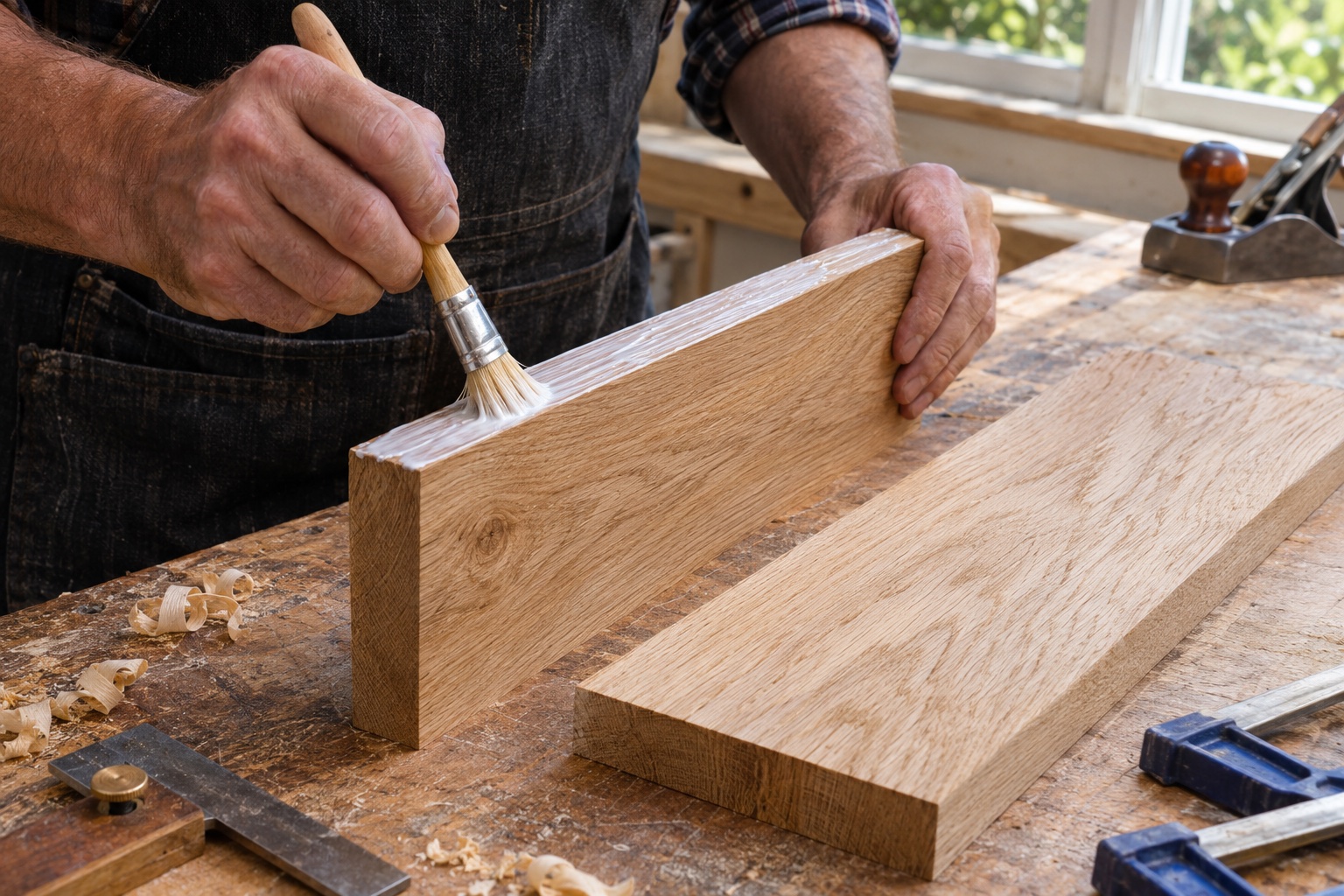
Start with the two pieces being joined. Are they solid timber, engineered board or a mixed assembly? Will the joint sit indoors at stable conditions, or face dampness and temperature swings? Is the joint close-fitting, or are there voids that need a different repair method? These questions narrow the adhesive family before brand, pack size or price enters the conversation.
For production work, assembly time is especially important. A glue with a short working window may suit a small joint but make a complex frame stressful to clamp. A longer window can help with positioning, but may change the production cycle. Clamp time and full cure are separate points: taking a piece out of a clamp does not necessarily mean it is ready for machining, finishing or service.
Finishing matters too. Dried glue left on the face can interfere with a stain or coating. Follow the adhesive maker’s cleanup instructions and test the finishing sequence on a sample, particularly when using decorative wood with a visible grain. A well-chosen adhesive should support the whole workflow, not only hold the two parts together.
How to make a reliable PVA wood joint
A good PVA joint depends on fit, clean surfaces and the manufacturer's application guidance. Dry-fit the parts first. The surfaces should be sound and prepared as specified, with enough contact for the adhesive to work. Spread the recommended amount over the bonding area; random patches can leave dry spots, while a heavy pool wastes glue and complicates cleanup.
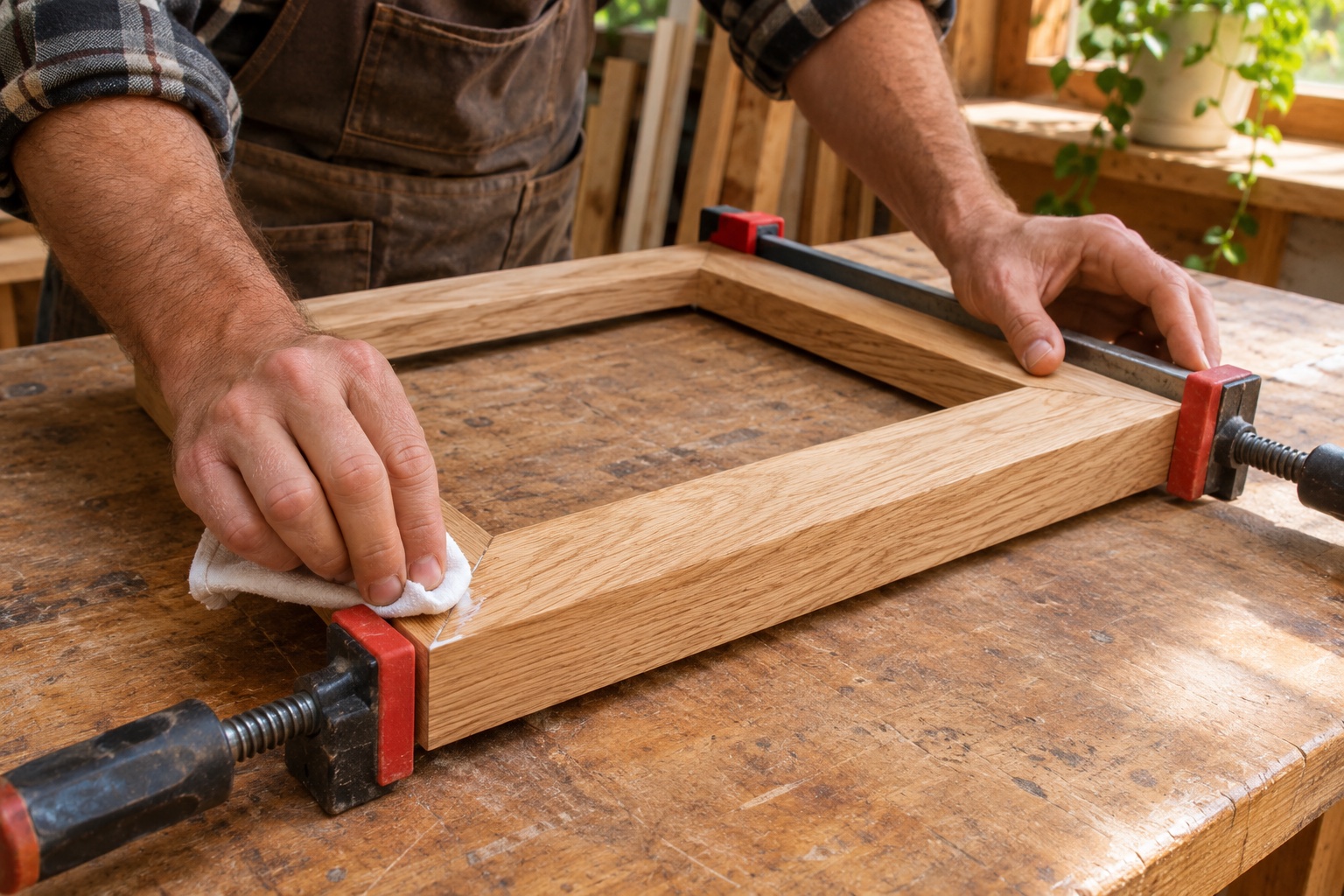
Bring the pieces together within the stated open time and clamp them as directed. The aim is consistent contact across the joint, not maximum force. Excessive pressure can create problems with some assemblies, while poor contact leaves gaps. Wipe or manage squeeze-out using the product instructions, then give the joint its specified clamp and cure time under suitable temperature and humidity conditions.
Wood movement still matters after curing. Adhesive cannot eliminate expansion and contraction caused by changing moisture content. Joinery design, timber conditioning and storage are part of a durable result. If repeated failures occur, look at joint geometry and wood condition along with the glue.
Our PVA white glue page covers wood bonding and interior assembly as a product category. For a particular production line, ask for the data sheet and a sample before assuming any general white glue fits the process.
What should a buyer or distributor specify?
“PVA wood glue” is a useful search phrase, but it is not a complete purchasing specification. A distributor supplying workshops or a factory ordering repeat batches should describe the end use, materials and process. That makes it easier to compare products that may otherwise look identical on a shelf.
- State the substrates and whether the joint is interior, exterior or exposed to intermittent moisture.
- Give the required open time, clamp time and line speed.
- Ask for viscosity, solids content and any relevant performance or resistance test details.
- Confirm storage conditions, shelf life, pack sizes and labeling language for your market.
- Approve a sample in the real assembly and finishing process before a bulk order.
If the use includes structural loading, long-term wet exposure or regulated furniture production, raise those requirements explicitly. The supplier should identify the applicable product and supporting documentation; do not infer a rating from “wood glue” on the front label. Our buyer resources can help structure a sourcing brief for adhesives and related finishing materials.
Frequently asked questions
Is all wood glue PVA?
No. Many common white and yellow wood glues are PVA-based, but polyurethane, epoxy and specialty adhesives are also used on wood.
Is PVA glue the same as white glue?
Many white glues are PVA-based. Their intended uses and performance vary, so check the individual product rather than treating the names as equivalent specifications.
Can PVA wood glue be used outdoors?
Only if the specific product is rated for the intended outdoor exposure. Some PVA formulations have enhanced water resistance; others are intended for dry interior use.
Does a stronger clamp make the bond stronger?
Not automatically. The joint needs proper fit and even contact with clamping that follows the adhesive maker’s instructions. More force is not a substitute for preparation.
Need PVA glue for a product line?
Send us your wood type, assembly method, exposure conditions, required pack size and destination market. We can discuss the product information and sample needed for evaluation.
Ask SZSTRONG about adhesives